
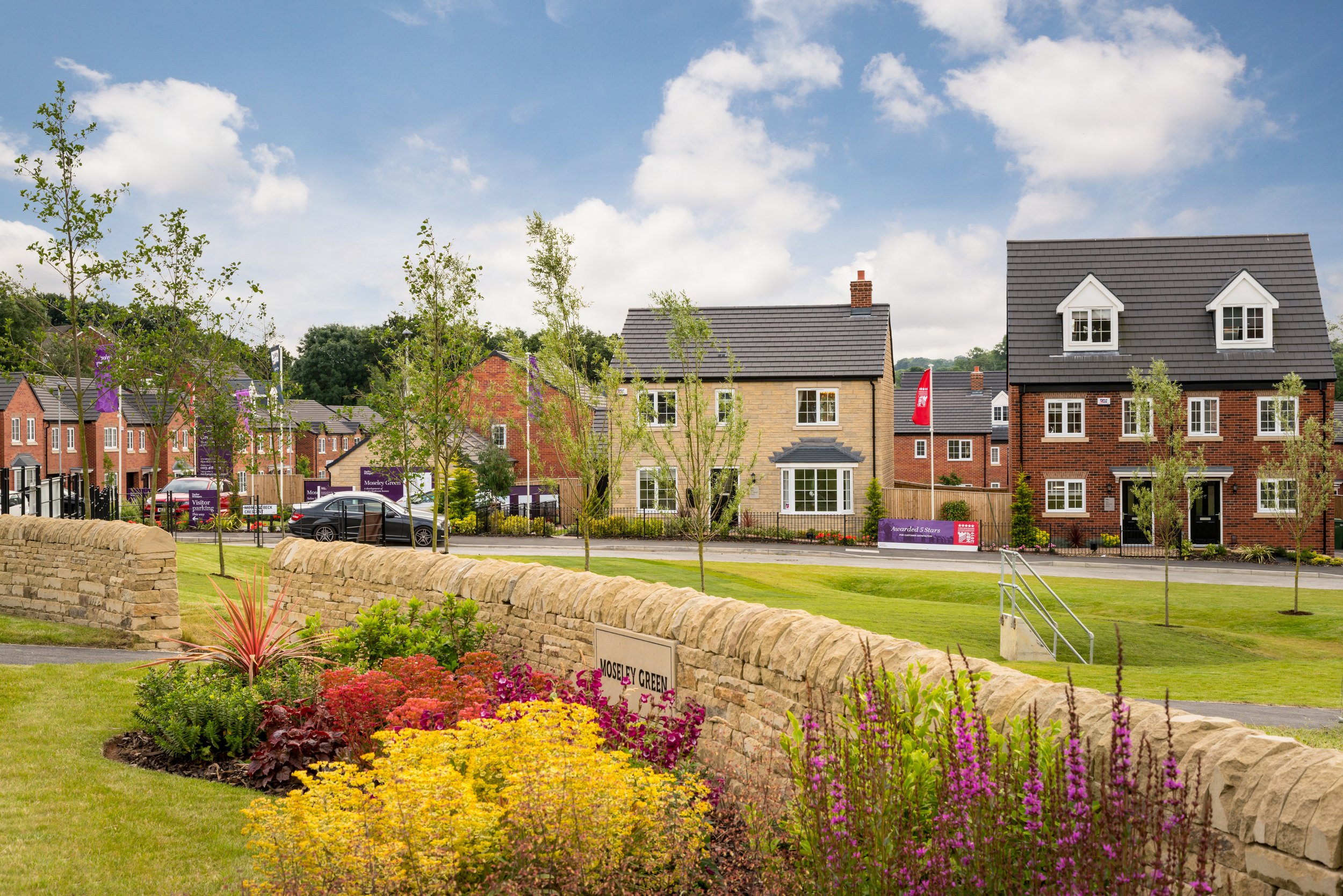
The Proposals
The Site

Site location plan
The application site measures circa 13.34 hectares in area and comprises undeveloped agricultural land to the north side of Hare Street Road and the south side of the Causeway, on the eastern edge of Buntingford.
The site sits adjacent to an existing residential development to the east, off Aldridge Way. The plan to the right shows the Reserved Matters application boundary in red as well as the previously Hybrid application boundary in blue in the context of the wider site, placing the new surgery in a convenient location relevant to the existing residents of Buntingford.
The site also comprises an undeveloped field parcel, which is not covered by any statutory landscape, environmental, or other designations. In terms of local planning policy context, the site lies outside of, but immediately adjacent to the settlement boundary of Buntingford, as defined by the adopted East Hertfordshire District Plan (October 2018). The site is located within a broad local policy area designated on the Proposals Map (2018) as the ‘Rural Area Beyond the Green Belt’, which covers most of the northern half of the district, as Buntingford is the only town in East Hertfordshire which does not lie within the Metropolitan Green Belt.
Key features for the new and existing community
Taylor Wimpey has submitted a Reserved Matters application to East Herts District Council comprising a mix of 214 high-quality new homes, including a provision for 40% affordable housing to help meet local housing need.
The new homes will be supported by 6 hectares of open space, which will include play spaces, informal pedestrian routes, informal pedestrian routes, a Sustainable Urban Drainage Strategy (SuDS). These improvements all contribute towards a significant increase in biodiversity value, equating to 55.62% increase of habitats and 34.14% in relation to hedgerows post-development.
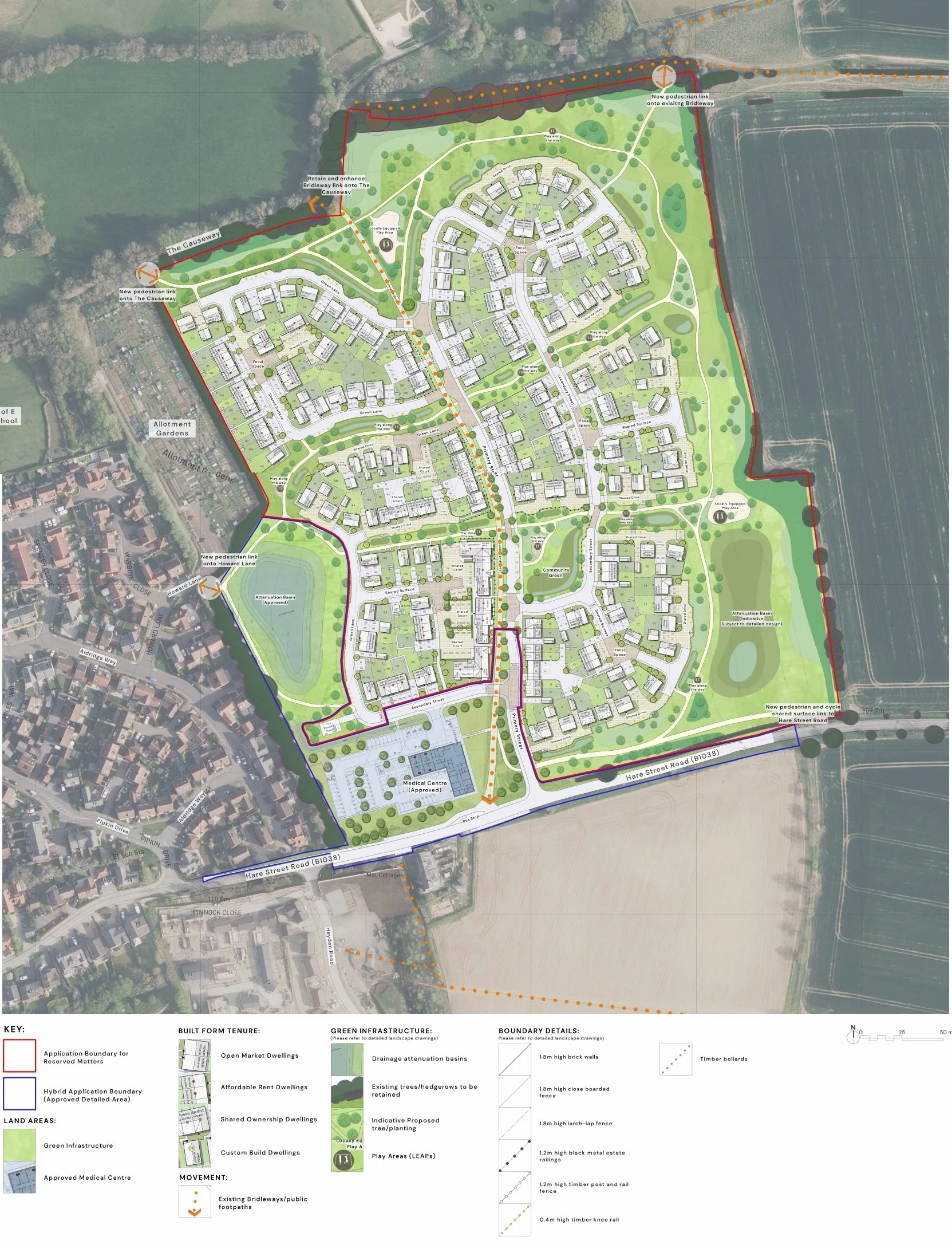
Site layout
Key features and benefits
The development will release a number of community benefits once it goes through the Reserved Matters application process, including:
A mix of around 214 high-quality new homes
40% of all homes to be designated as affordable (around 80 homes)
Over 6 hectares of formal and informal public open space
Significant financial contributions towards infrastructure and education in line with the councils and communities needs
Significant biodiversity enhancements., equating to 55.62% increase to habitats and 34.14% to hedgerows
Use of sustainable building practices such as electric vehicle charging points and air source heat pumps
New pedestrian routes to the site, including an upgrade of the existing public bridleway Buntingford 013 that crosses the site
Our Proposals
Example A of indicative streetscene proposed for this development
Example B of indicative streetscene proposed for this development
Example C of indicative streetscene proposed for this development
The proposed housing in Buntingford will help meet the need for housing in the area. East Hertfordshire needs to meet its current housing obligations to provide 18,458 homes by 2033 outlined in its Local Plan and is currently demonstrating a shortfall in its five-year housing land supply.
Taylor Wimpey is seeking to deliver 214 high-quality homes, with a mix of 1, 2, 3, 4 and 5 bed homes, of which there will be provision for 40% affordable housing to help meet local housing need.
Of the 86 affordable homes, 64 will be allocated as affordable rent and the remaining 22 will be allocated as shared ownership in accordance with the outline planning permission. The table below shows the proposed full mix of housing.
Example D of indicative streetscene proposed for this development
Overhead plan showing location of streetscenes
A landscape-led approach
As part of the proposals, the new development will deliver over 6 hectares of new public open space that will be accessible to all, designed to foster community activities and recreational opportunities. This will include new areas of informal and equipped play.
Potential benefits of the proposed landscaping strategy include:
A 55.62% increase in biodiversity value of habitats and 34.14% in relation to hedgerows.
Introducing extensive areas of new species-rich native planting, this will include areas of wildflower grassland, wetland habitat, tree and shrub planting, which will increase biodiversity net gain across the site.
Informal pedestrian routes, which will provide opportunity for new and existing residents to experience nature.
Retention of the vast majority of existing treelines, hedgerows and woodland.
Locally Equipped Areas of Play (LEAPs) for children.
The submitted Reserved Matters planning application has been supported by ecological surveys which will inform a programme of local ecological enhancements to be delivered as part of the proposals. New landscaping and planting with the development will create new habitats with the overall aim being to achieve improved biodiversity.
Flood Risk & Water Management
The site falls within Flood Zone 1 which represents the lowest-risk areas in England, with a less than 1 in 1,000 (0.1%) annual probability of river or sea flooding. Therefore, the proposed development is deemed to meet the requirements of flood risk assessments.
Where possible, the development is being designed to reduce storm water runoff by using permeable surfaces. The Reserved Matters application includes proposals for a large attenuation basins and associated SuDS features to manage surface water runoff to reduce flood risk in a sustainable manner.
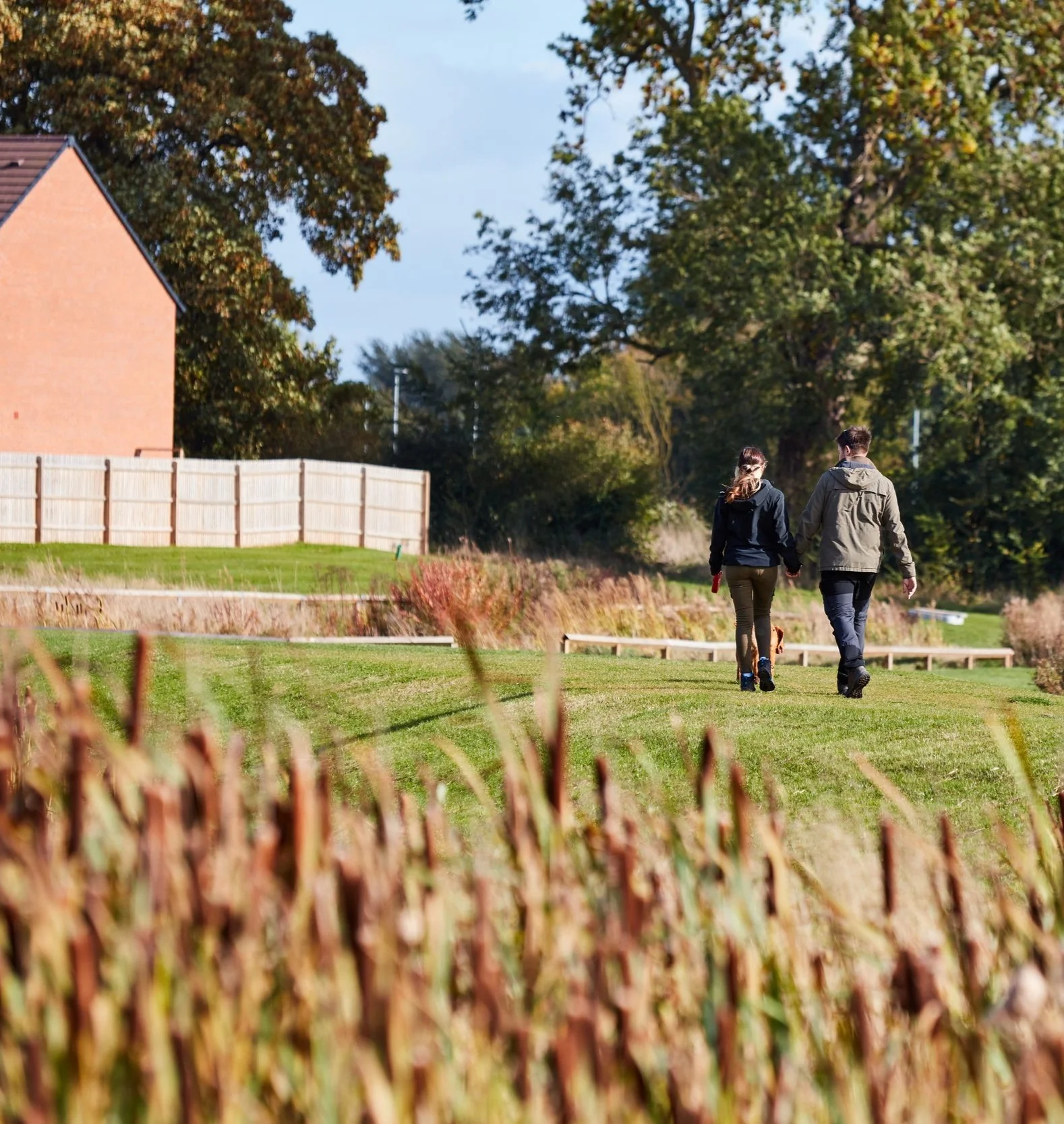
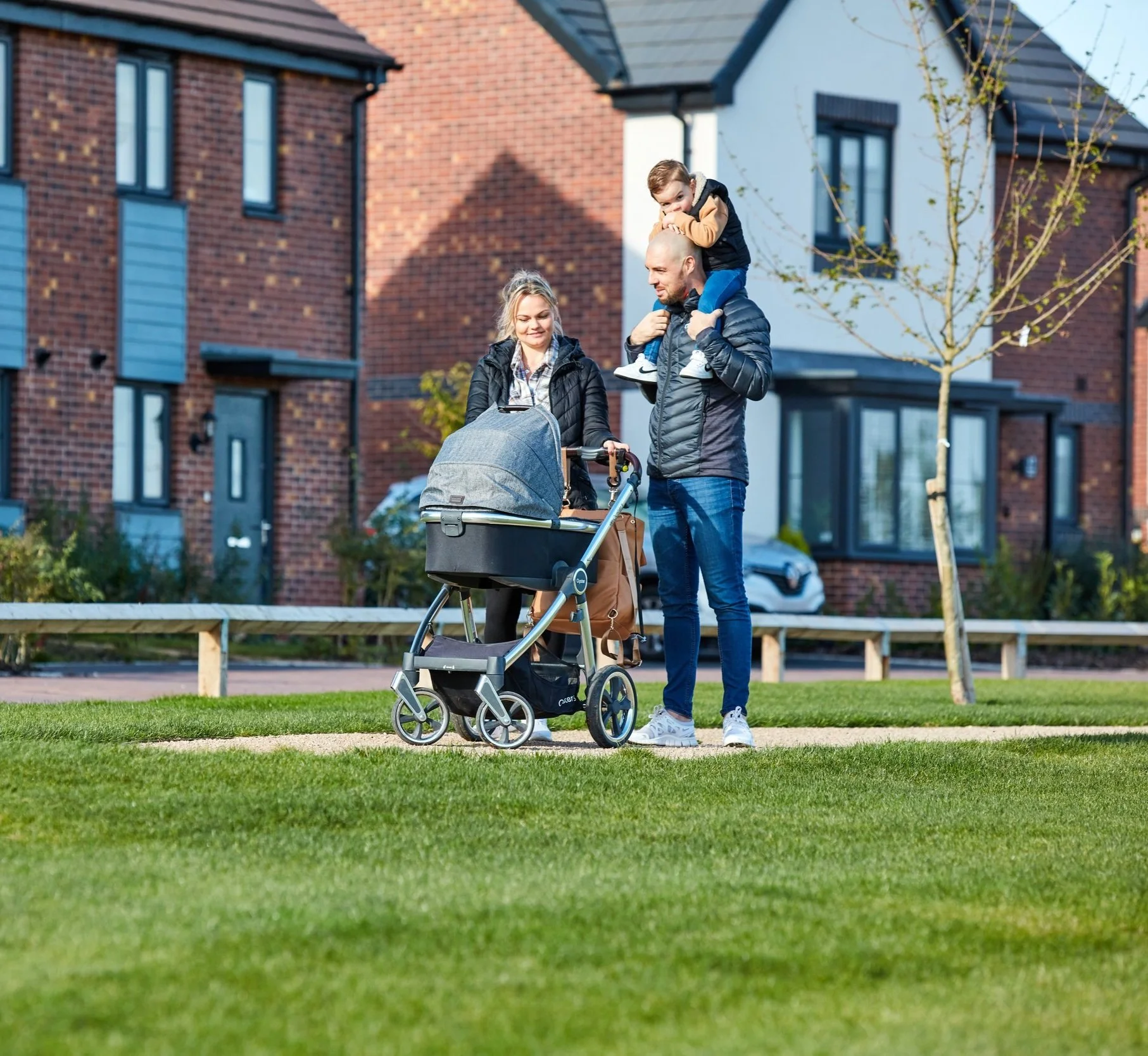
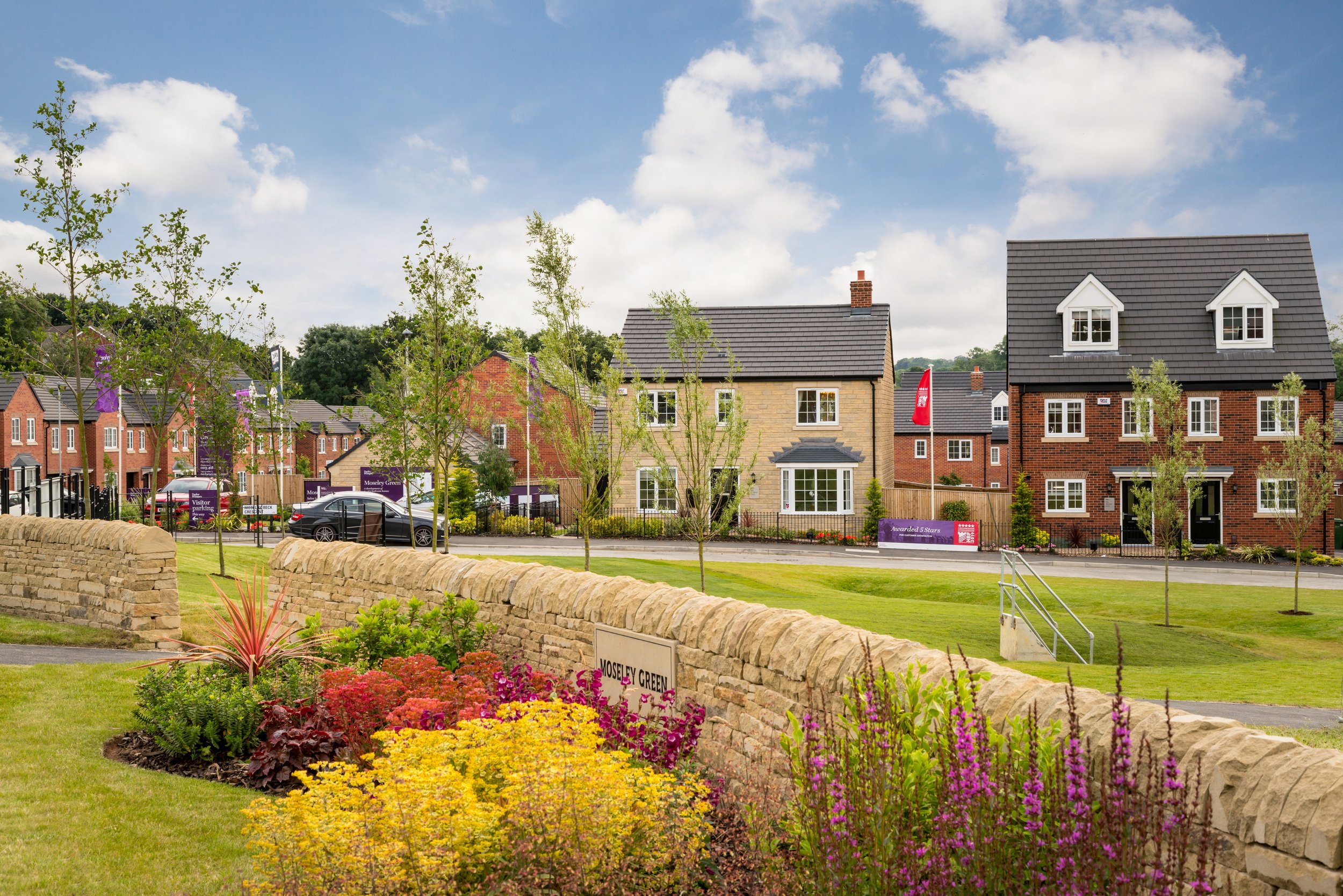

Illustrative examples of landscaping features
Sustainability
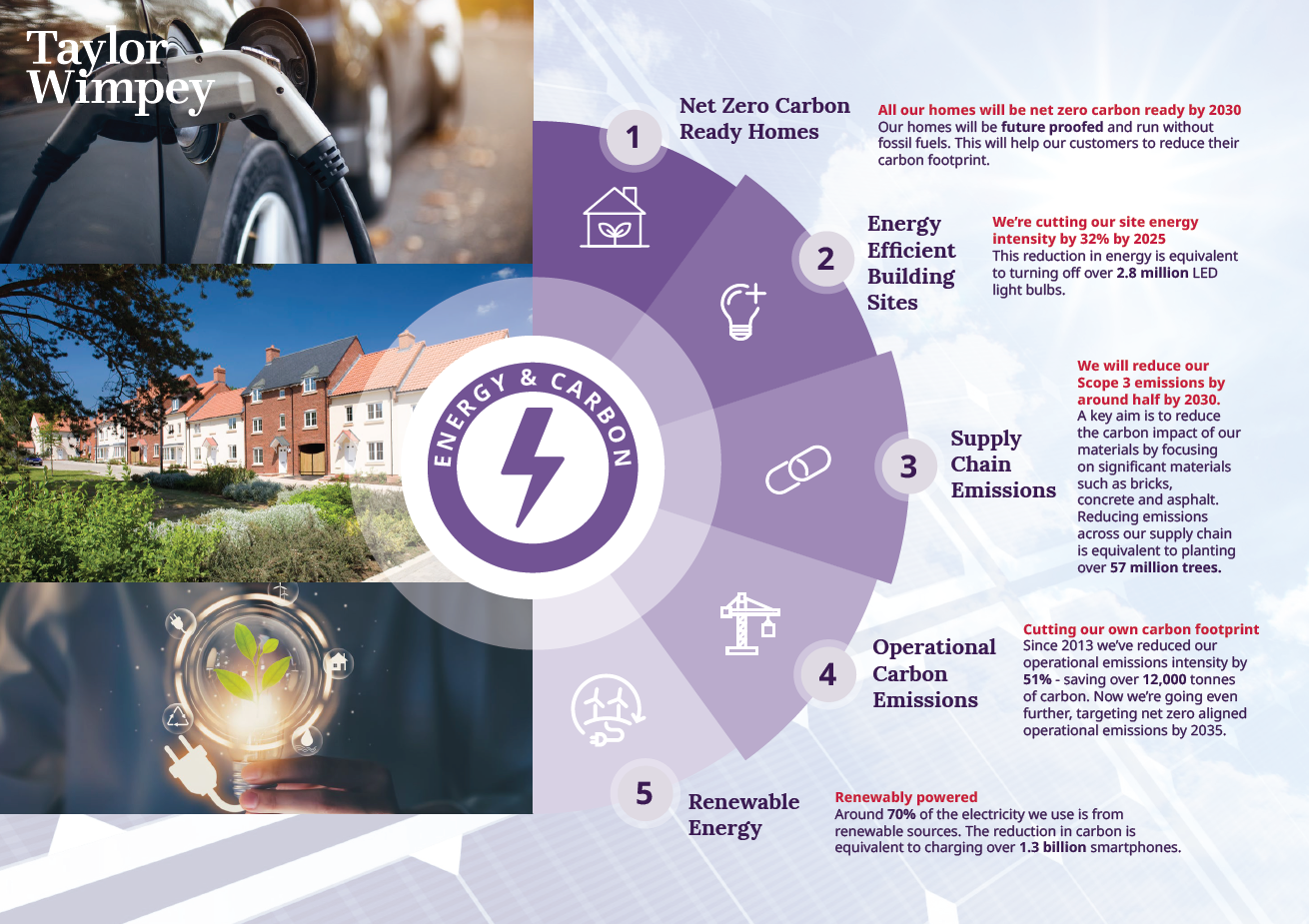
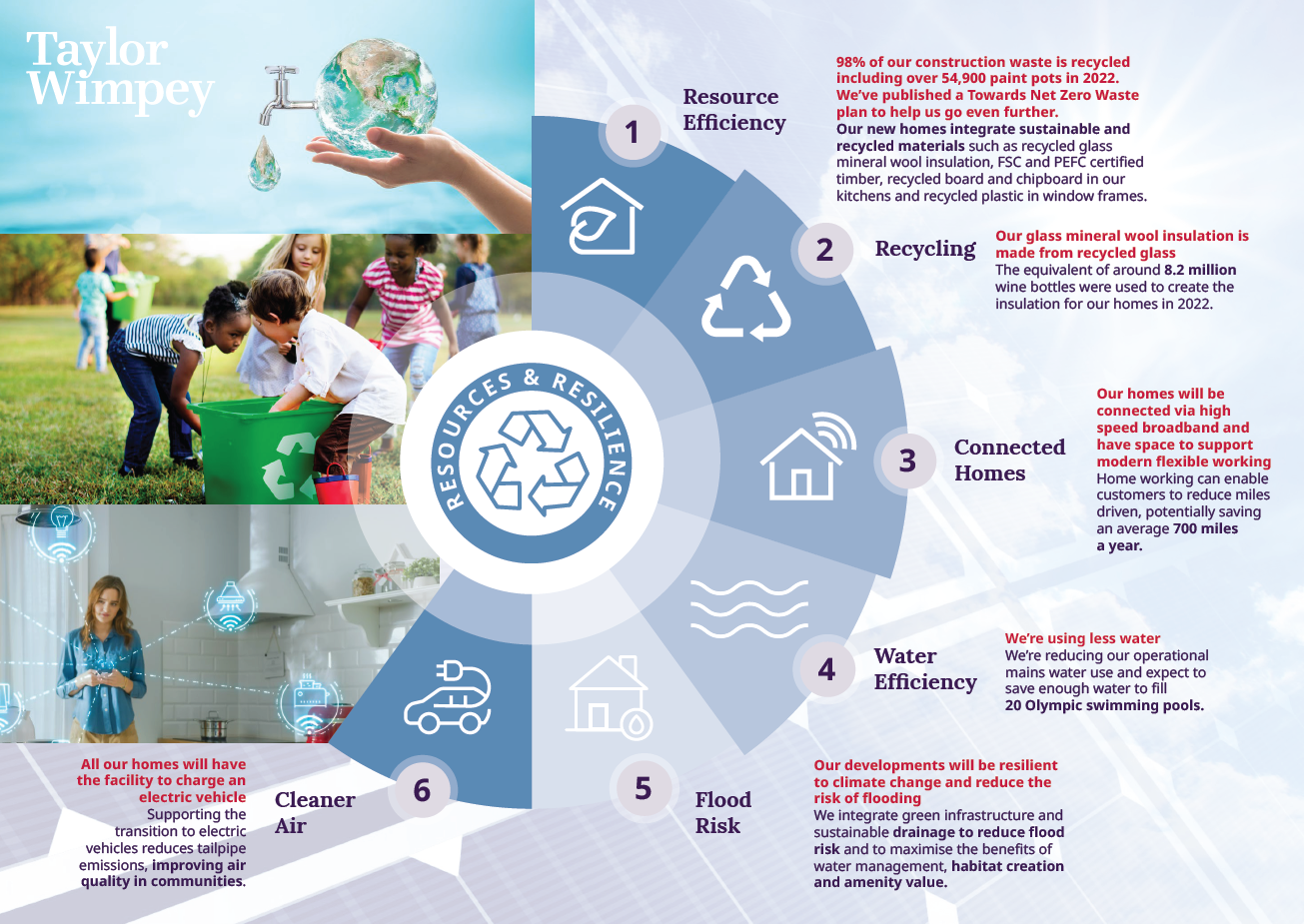
We are committed to becoming net zero in our operations by 2035 and across our value chain by 2045, five years ahead of the UK’s target.
Taylor Wimpey was the first UK homebuilder to achieve the Carbon Trust Standard for our overall approach to carbon management, including our policy, strategy and verification of our data and processes. We remain the only volume housebuilder to hold this standard.

It is anticipated that, in 2026, the Government will make a major update to the standards for new build homes - the Future Homes Standard (FHS) - designed to increase energy efficiency and reduce greenhouse gas emissions. The ultimate goal is to help the UK reach its national net zero target.
Taylor Wimpey is testing a wide range of new technologies and fabric solutions in five trial prototype homes to help provide significant insight into how to address major industry challenges to deliver zero carbon ready homes in readiness for the incoming FHS changes. The aim is to find solutions to build high quality, low carbon homes. The cross section image below shows an example of the specifications that we are incorporating in to achieve Zero carbon ready homes.
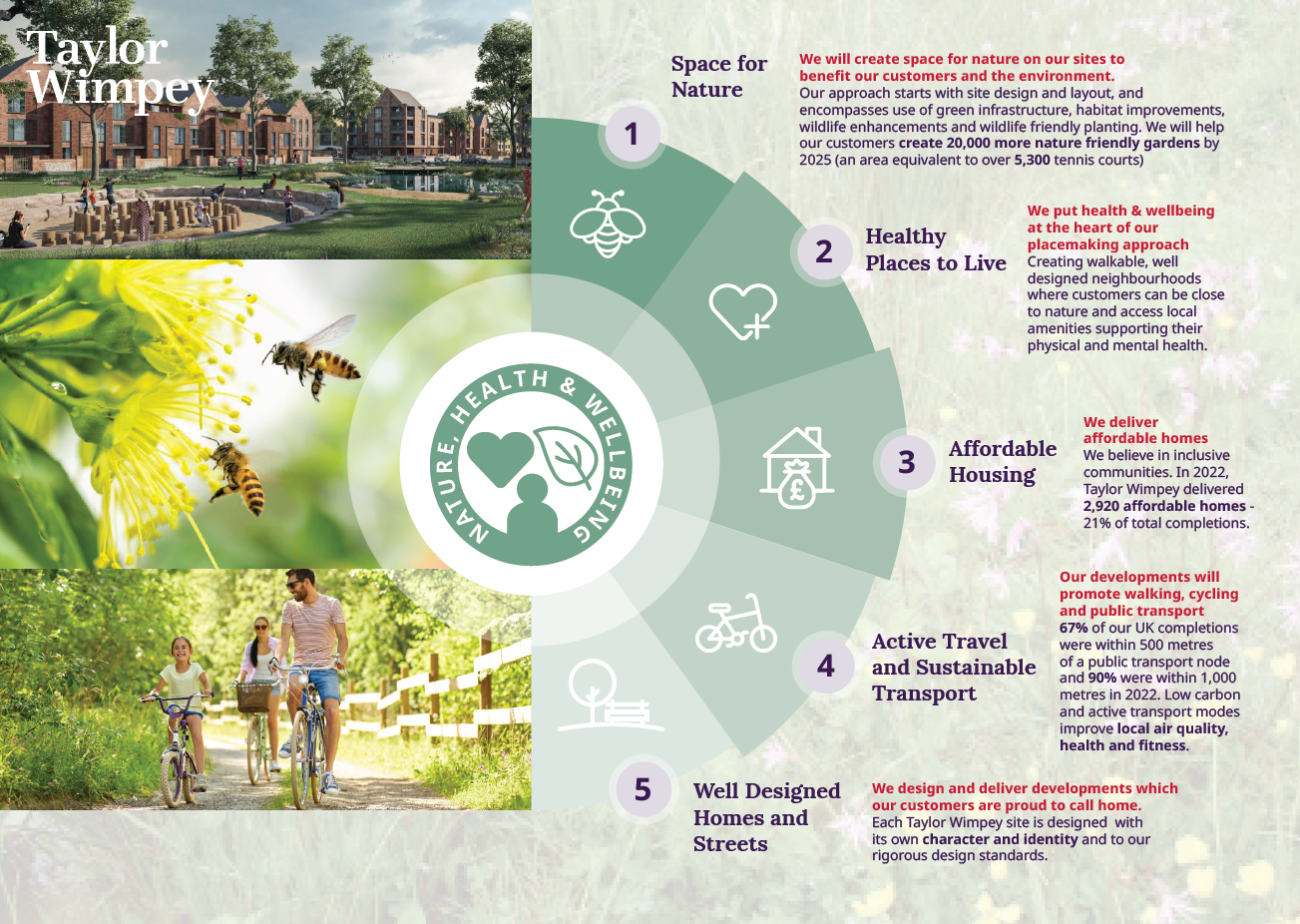
Open space, planting and landscaping
Building on the Government’s biodiversity net gain commitment, Taylor Wimpey developments are designed to ensure that they provide more habitat for wildlife than before we started work.
The development proposals provide an opportunity to deliver significant enhancements for wildlife, including the provision of new species-rich native habitats such as wildflower grassland, wetland features, trees, scrub and hedgerows. Providing informal pedestrian routes through these habitats would also provide opportunity for new and existing residents to experience nature.
All suitable sites include features such as:

Bat and bird boxes - nesting boxes for various species of bats and birds that can be installed on homes and in trees

Native tree and shrub planting - the use of native species that are favoured by our wildlife

Retention of existing trees and hedgerow wherever possible - established trees and hedgerows support and provide homes for a wide range of wildlife

Bug hotels - habitats made from a variety of natural materials, such as bamboo canes and dead wood, that provide a safe and cosy shelter for insects

Hedgehog highways - holes cut into the bottom of fences to allow hedgehogs to travel freely through gardens

Pollinator-friendly planting - species of flowering plants that attract pollinating insects such as bees and butterflies

Bee bricks - construction bricks with nesting holes for solitary bees, which can be built into homes or used as part of features around gardens and green spaces

Pollinator pathways - connected areas of green space planted with flowering plants that attract pollinators
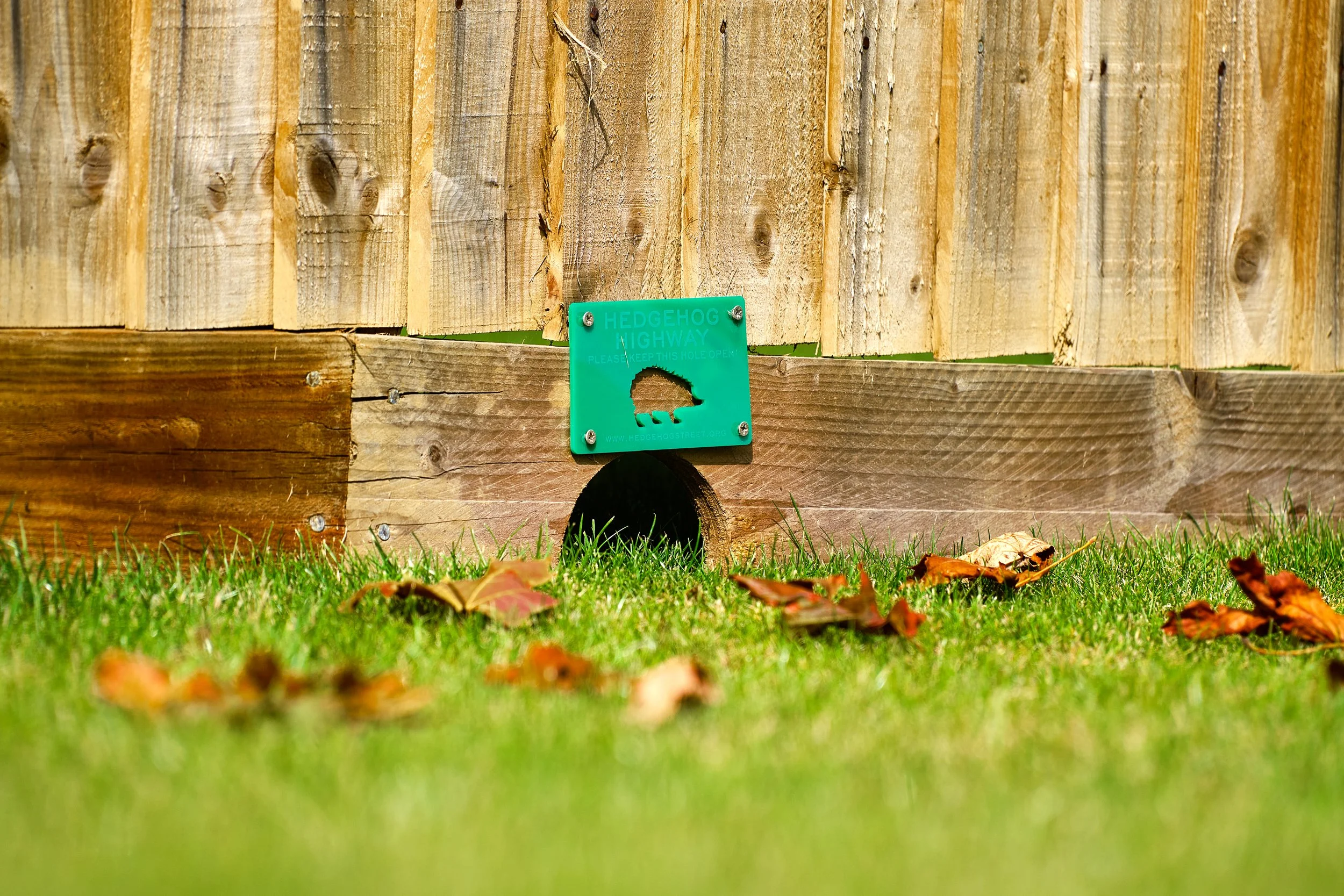


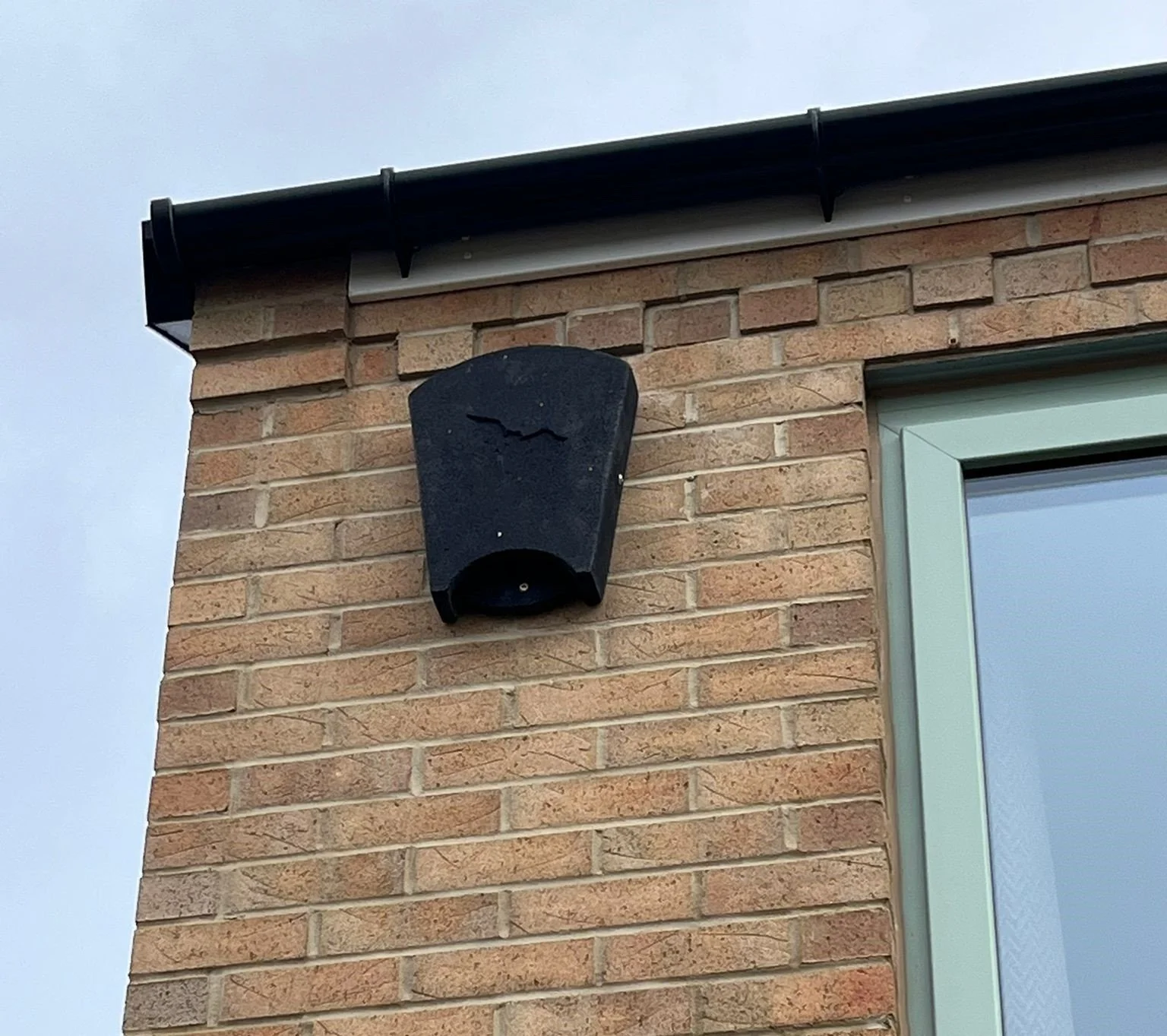
Illustrative landscape features
Access and sustainable travel

The site is well located to a range of local facilities and services all within Buntingford, including convenience retail, post office, primary, secondary and college education and leisure destinations including library, gymnasium and tennis club. All of these key local destinations are located within typical walking/cycling distances of the site.
To promote active, sustainable travel to and from these facilities and services – the submitted Reserved Matters application proposes access through the GP surgery and onto Hare Street Road and the adjacent residential area. This provides direct connections to the wider pedestrian and public right of way networks, with multiple points of access to the site and the GP surgery from the north, west and south.
To further encourage active, sustainable transport options, the development will provide a new bus stop on Hare Street Road, minimising walking distances to the surgery, with the Herts Lynx service also able to serve these stops and the surgery.
A new doctor’s surgery for Buntingford

CGI of the proposed new surgery

CGI of the proposed new surgery

CGI of the proposed new surgery
GP Surgery site layout
A key part of the previously approved hybrid application is the development of a new GP surgery in Buntingford. The current facility, the Buntingford and Puckeridge GP surgery which sits in the centre of Buntingford, is currently oversubscribed and has limited ability to increase its capacity for the existing population or for future development.
It was after consultation with the NHS Hertfordshire and West Essex Integrated Care Board (ICB) who said that there is a ‘clear and urgent’ need to address primary healthcare provision in Buntingford and the current Buntingford and Puckeridge Practice is operating over capacity, that the proposed new medical centre was explored.
The approved GP surgery proposed as part of the hybrid application offers the opportunity to deliver a new medical facility up to twice the size of the existing premises, as well as providing the right infrastructure and access to support existing patient demand.
The building will be BREAAM Excellent meaning that the building will be highly sustainable, energy-efficient and have a minimal impact on the environment.
Our objectives in delivering a new Doctor’s Surgery for Buntingford are to:
1. Enable the practice to extend its General Medical Services and address current, and future, capacity issues by recruitment of further clinical staff including GP and nursing staff.
2. Provide the space to extend the range of services provided - for example, supporting people with long term conditions, community health services, mental health support, as well as access to social prescriber support and Citizens Advice Bureau.
3. Provide the space to enable better multi-disciplinary teams (MDT) working across broader community functions – including facilities to enable MDT meeting with palliative care teams and district nursing teams, child health visiting and safeguarding teams, as well as the PCN community of allied health professionals.
4. Support the practice to extend its capacity as a training centre for the wider system – GPs, nurses/HCAs and Primary Care Network (PCN) staff training.
5. Support wider system improvements by ensuring patients can be cared for in the right setting, avoiding attendance at A&E where possible (improving the economic and efficient use of acute hospital services).
6. Supports practice aspirations to extend place-based services by providing services closer to patients’ homes. Improved premises will allow our patients to access our local surgeries rather than travelling.
7. Provide space to host a PCN shared acute illness/respiratory hub – providing local access to implementation of the current trial of shared PCN acute on the day presentations including respiratory illness.
8. Provide space for secondary care clinics in a local setting – extra room capacity, especially at quieter times such as the weekends, could allow potential use of the premises for secondary or intermediate care clinics to be provided locally on site.
9. Provide a site suitable for primary care for the next 30 years – the site should be future proofed by allowing now for space for further extension. This will require a site allowing future extension of the building footprint without affecting parking provision.